
Growing Career Opportunities: Career Scope in Power Electronics and Power Systems
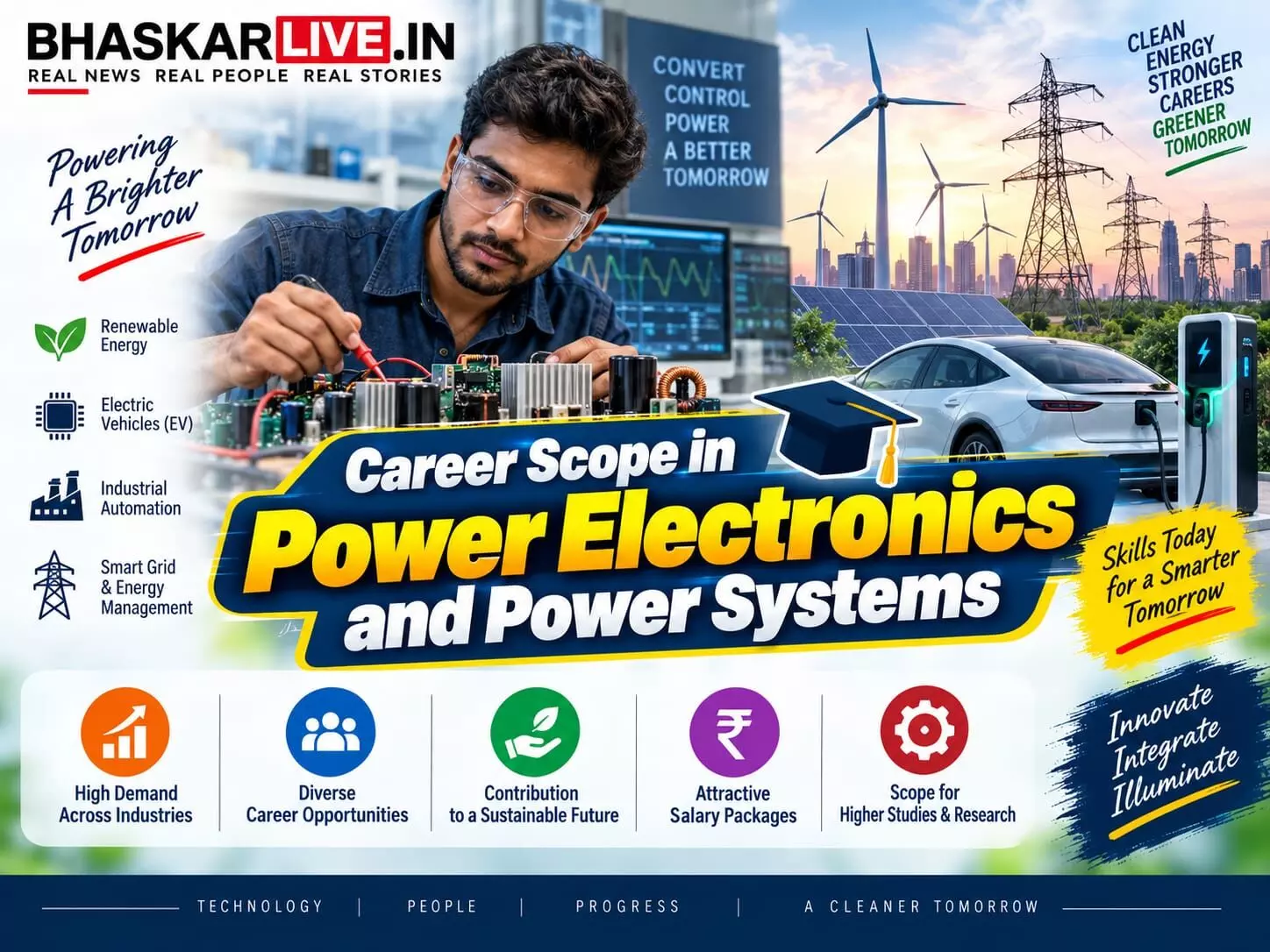
DIGITAL DESK | Power electronics and power systems are becoming important career areas as electricity use, electric mobility, renewable energy and grid technology continue to develop.
Power electronics focuses on converting and controlling electrical energy. It is used in electric vehicles, battery chargers, motor drives, renewable-energy systems, energy storage and industrial equipment. IIT (ISM) Dhanbad lists areas such as EV powertrains, battery chargers, solar inverters, wind-energy systems, microgrids and smart grids among applications of the field.
Career Options in Power Electronics
Students specialising in power electronics can work in several technical roles, including:
Power Electronics Engineer
EV Drive Engineer
Motor Control Engineer
Renewable Energy Engineer
Embedded Control Engineer
Battery and Charging Systems Engineer
Research and Development Engineer
Modern power-electronics work can involve converters, inverters, electric motors, battery-management systems and charging infrastructure. Industry recruitment research also identifies EVs, renewable energy, battery storage, industrial automation and aerospace as areas where power-electronics expertise is being used.
Career Scope in Power Systems
Power systems engineering deals with the generation, transmission, distribution and use of electrical energy.
Graduates can pursue roles such as:
Power Systems Engineer
Grid Operator
Protection and Control Engineer
Smart Grid Engineer
Renewable Energy Engineer
Power-System Planning Engineer
Research and Development Engineer
The field is also becoming closely connected with renewable-energy integration, smart grids and energy-management systems.
Why EVs and Renewable Energy Matter
Electric vehicles require several power-electronics technologies, including motor drives, inverters, battery-management systems and charging equipment. Renewable-energy systems also use power converters to connect solar and wind generation with electricity networks.
As electrification expands, engineers with knowledge of power conversion, motor control, energy storage and grid integration can work across several industries.
Skills Students Should Develop
Students interested in these careers should build a strong foundation in electrical engineering and develop practical skills in:
Power electronics and electrical machines
Power-system analysis
Control systems
Electric vehicles and battery systems
Renewable-energy technology
Smart grids
MATLAB/Simulink and engineering simulation
Embedded and digital control
Practical projects, laboratory work and industry exposure can also help students understand how these technologies are used in real-world systems. IIT (ISM) Dhanbad's postgraduate programmes, for example, include laboratory, simulation and project-based learning.
Fact Check
The main career claims are supported by current academic and industry sources. Power electronics is used in EVs, renewable energy, energy storage and industrial applications, while power systems covers electricity generation, transmission, distribution, grid operation and renewable integration.
However, career opportunities and salaries are not guaranteed. They depend on a student's qualification, technical skills, practical experience, employer, location and specialisation.